 Dowell
Deciphering Plant-Insect-Microorganism Signals for Sustainable Crop Production
Abstract
Agricultural crop productivity relies on the application of chemical pesticides to reduce pest and pathogen damage. However, chemical pesticides also pose a range of ecological, environmental and economic penalties. This includes the development of pesticide resistance by insect pests and pathogens, rendering pesticides less effective. Alternative sustainable crop protection tools should therefore be considered. Semiochemicals are signalling molecules produced by organisms, including plants, microbes, and animals, which cause behavioural or developmental changes in receiving organisms. Manipulating semiochemicals could provide a more sustainable approach to the management of insect pests and pathogens across crops. Here, we review the role of semiochemicals in the interaction between plants, insects and microbes, including examples of how they have been applied to agricultural systems. We highlight future research priorities to be considered for semiochemicals to be credible alternatives to the application of chemical pesticides.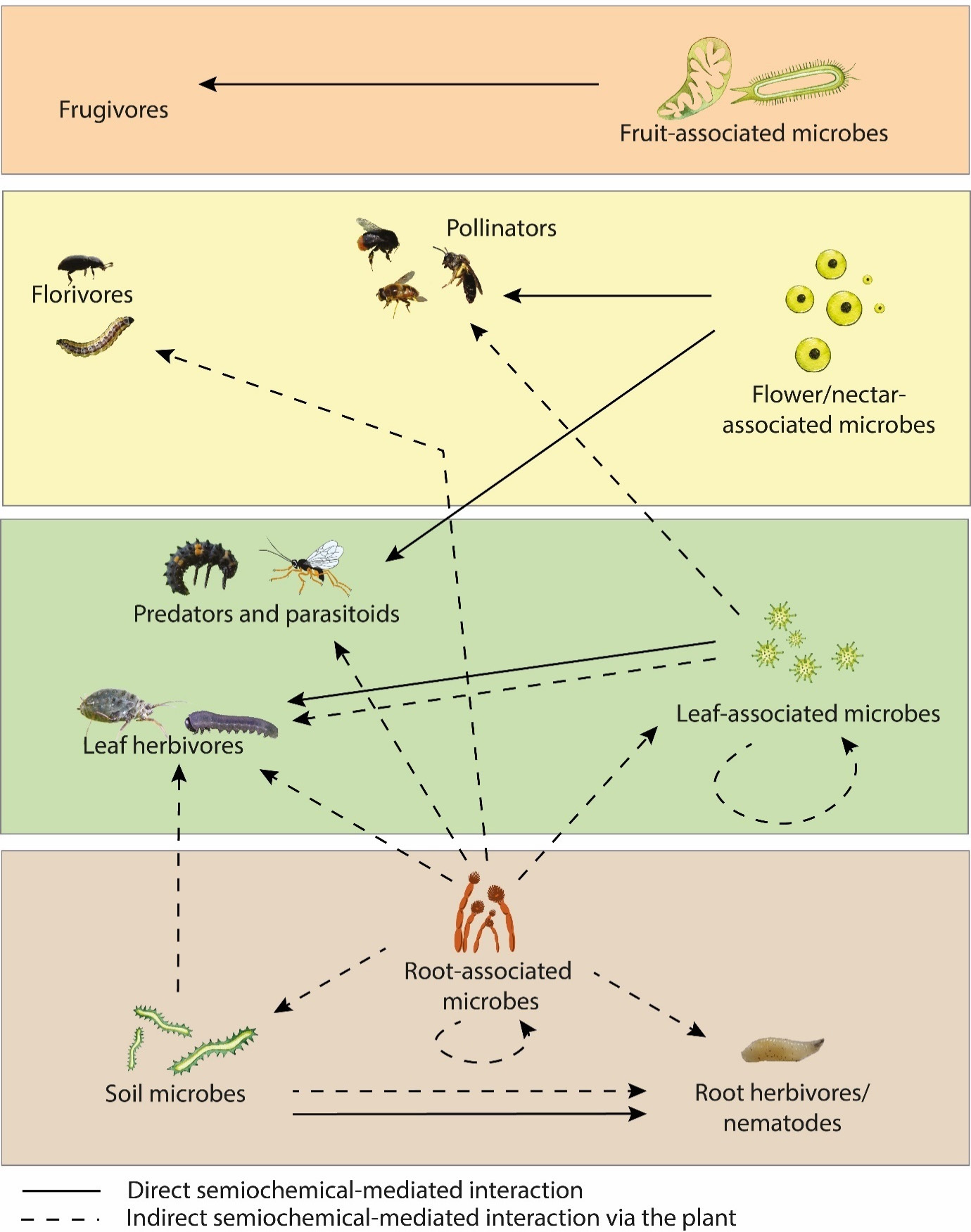
Reproduced without alteration from Thomas et al. (2023), Figure 2, licensed CC BY 4.0. View full size.