Dowell
Fungal Ecophysiology & Quantitative Genetics
How does genetic diversity translate into differences in the way fungal pathogens grow, acquire resources, tolerate stress, and interact with their hosts? Our lab combines fungal ecophysiology, quantitative genetics, and phylogenomics to connect genetic variation with pathogen traits—from differences among isolates to patterns across species and evolutionary lineages.
From genetic variation to pathogen traits
Using Botrytis as a central study system, we investigate variation in growth, fungal network morphology, nutrient use, metabolism, and responses to plant chemical defenses. These traits help us ask how pathogens function in different environments and how that variation relates to infection and host use.
Quantitative genetics provides a framework for asking how much trait variation is associated with genetic differences, how traits covary, and how their expression depends on environmental conditions. We aim to connect genomic variation with measurable phenotypes and identify the genetic basis of ecologically important pathogen traits.
Fungal physiology in an ecological context
A pathogen’s performance depends on both its genetic background and the environment it encounters. We ask how nutrient availability, host chemistry, and other environmental conditions influence fungal growth and physiology—and whether different genotypes respond in similar or contrasting ways.
By integrating physiological measurements, image-based analyses of fungal growth, and chemical profiles, we work toward understanding the relationships and trade-offs among traits. For example, do differences in resource use or tolerance of plant metabolites help explain variation in pathogen performance across hosts?
Connecting scales with phylogenomics
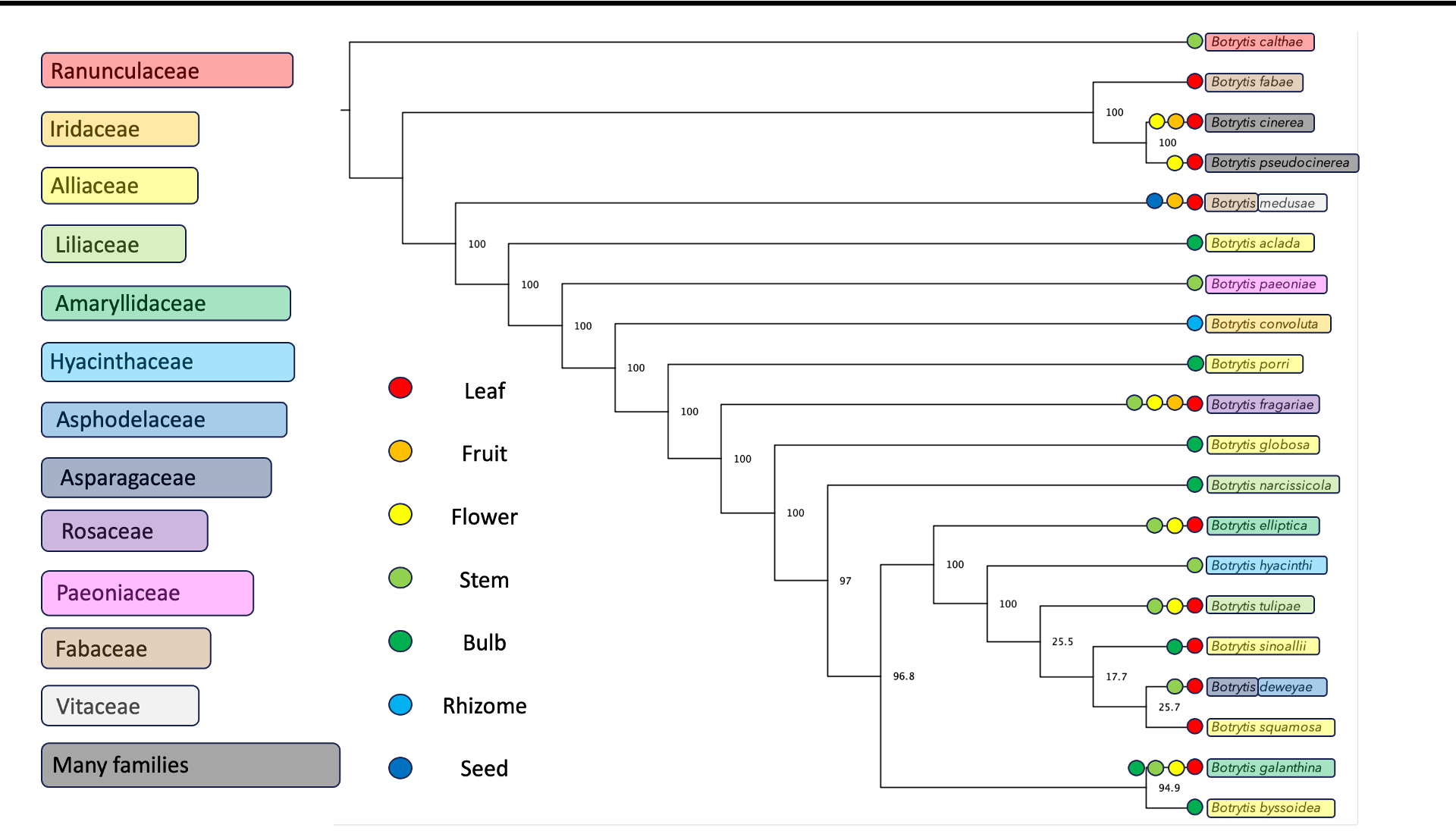
Phylogenomics places these trait comparisons in an evolutionary framework. Comparing isolates, species, and lineages allows us to ask whether genetic–trait relationships observed within species also help explain broader patterns of pathogen diversity, host range, and specialization.
Our goal is to link genetic diversity to pathogen function across scales: from the genetic basis of individual traits, through whole-organism physiology, to ecological interactions and evolutionary differences among lineages. This creates opportunities for projects that bring together genetics, fungal biology, plant pathology, metabolomics, and comparative methods.
In pictures