 Dowell
Plant Ecophysiology & Chemical Diversity
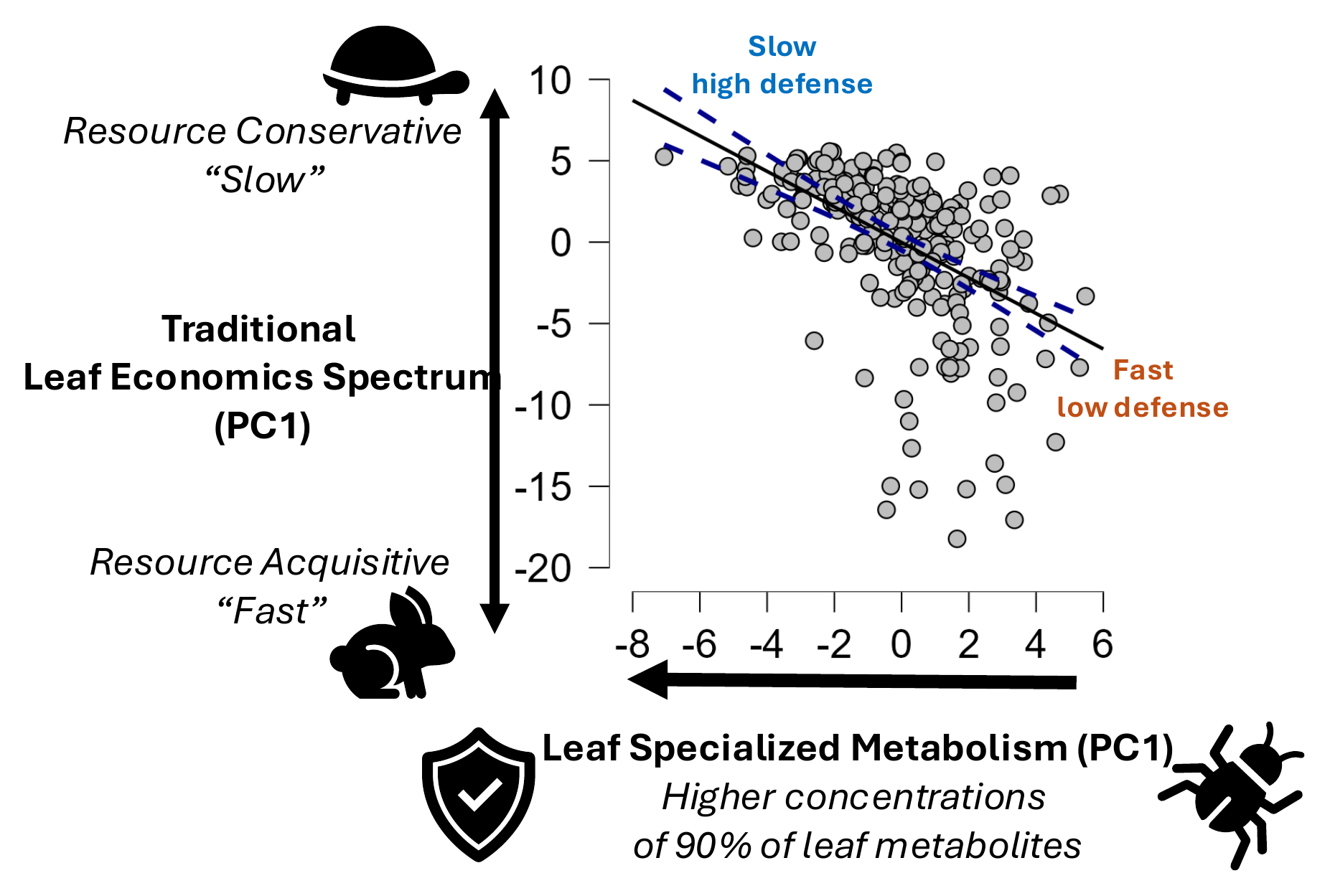
How do plants balance growth and defense within a species? We study plant ecophysiology and chemical diversity at the population level, asking how genetic differences and environmental conditions shape the ways plants acquire resources, grow, and interact with other organisms.
Variation within and among populations
Individuals of the same species can differ in their chemical profiles, physiological traits, and responses to their surroundings. We are interested in understanding that variation within populations and how it differs among populations, including the role of genetic background and environmental responses.
Sunflowers provide a system for connecting plant chemistry with physiology and genetic diversity. Comparisons among genotypes and populations let us ask whether combinations of traits recur—and when their relationships change with the conditions plants experience.
Growth–defense trade-offs in context
Investing in defense may carry costs, but the relationship between growth and defense need not be the same for every genotype or environment. We ask when these traits trade off, when they vary together, and how resource availability and interactions with other organisms change that balance.
Our questions include:
- How does chemical diversity relate to variation in growth, nutrition, and physiological performance?
- Do genotypes differ in the way they balance growth and defense under different conditions?
- Which relationships among traits are consistent within populations, and which change among populations or environments?
Connecting chemistry, physiology, and genetics
We bring together chemical profiling, physiological measurements, and comparisons of genetic variation to study plants as integrated organisms. Rather than treating a defensive compound or growth measurement in isolation, we ask how suites of traits function together.
This work complements our macroevolutionary research on plant traits. Comparisons within and among populations reveal variation at one scale; comparisons across species and lineages help us ask whether those same relationships extend across evolutionary history.