Dowell
Macroevolution of plant chemodiversity
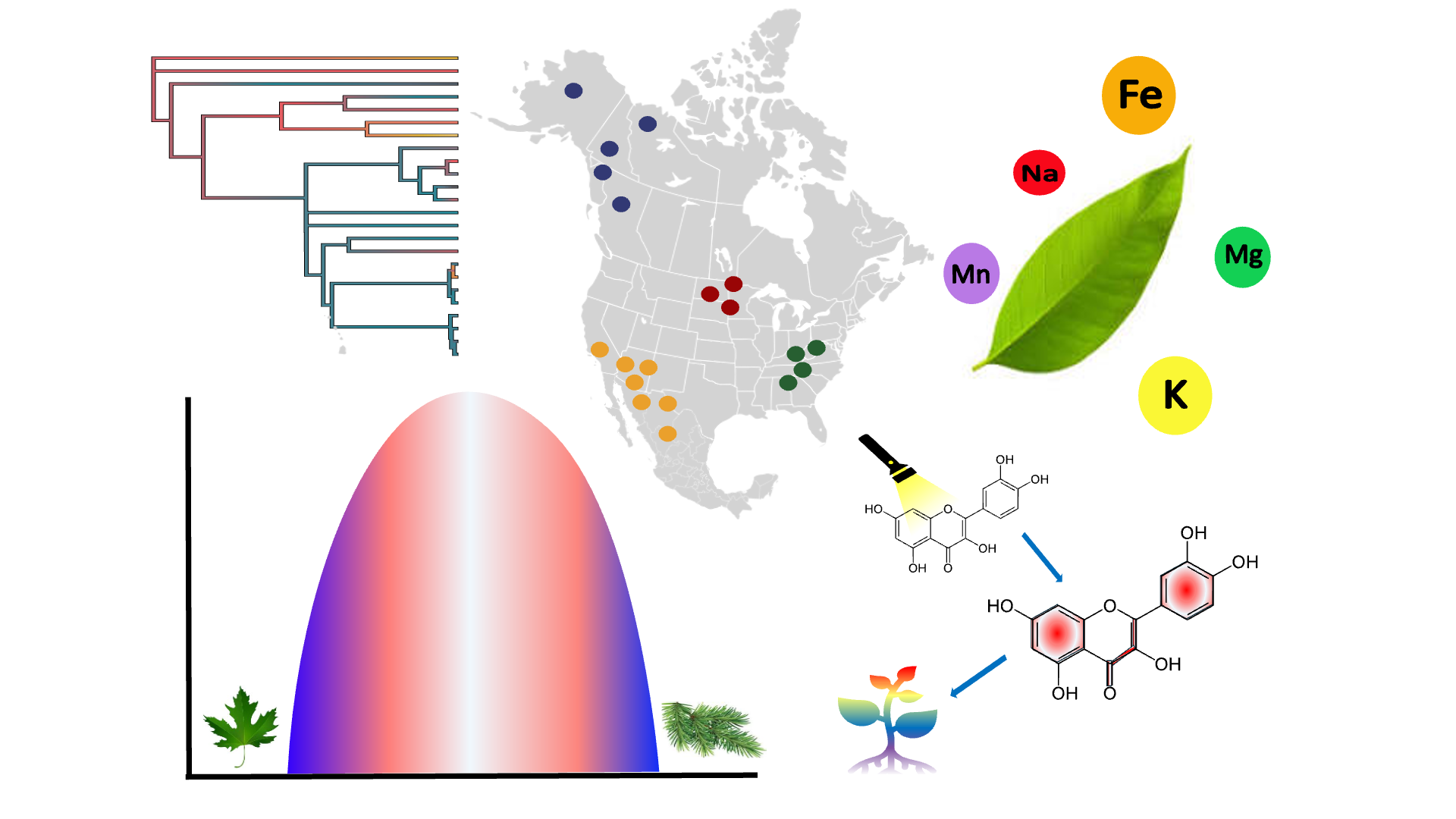
The leaf economic spectrum (LES) provides a framework for understanding how plants balance resource acquisition and life history strategies along an acquisitive–conservative axis. While structural and physiological traits fit well within this framework, defense traits remain poorly integrated, as others have hypothesized that metabolite distributions within leaves are governed by hidden, complex variables. However, our work shows that defense metabolites fit well within the LES spectrum.
My group is tackling this challenge by combining untargeted metabolomics, leaf mineral nutrition, and general physiological measurements to construct phylogenetically corrected whole-leaf networks. These networks allow us to move beyond single-trait correlations and instead define how suites of structural, chemical, and nutritional traits interact to shape a genus-specific “optimal leaf” for a given environment.
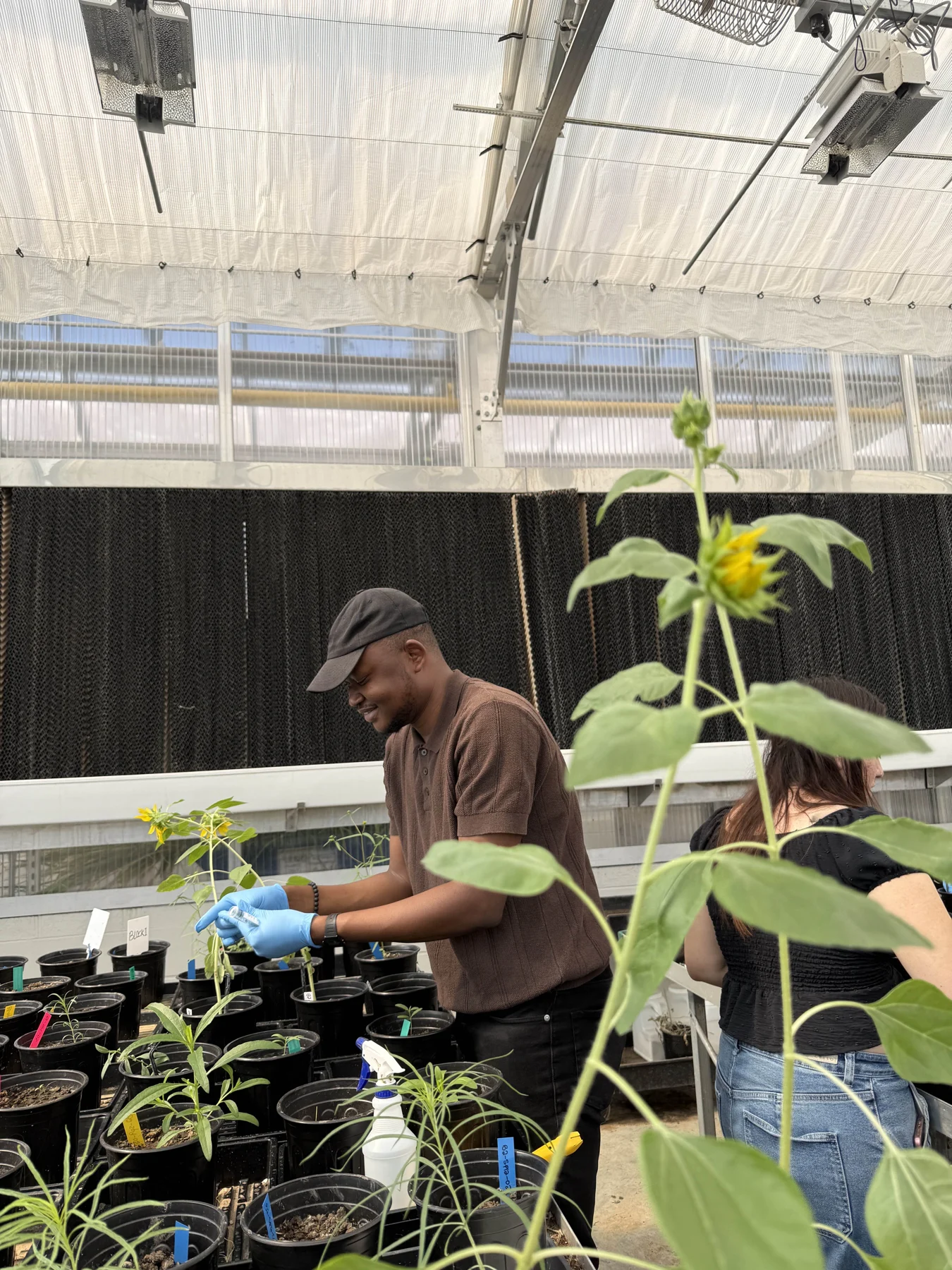
Our primary system leverages a large-scale common garden at the Arnold Arboretum (Harvard University), spanning 16 genera of temperate woody plants with at least 20 species per genus. This unique framework provides an unprecedented opportunity to examine the macroevolution of the LES, testing how well it predicts variation in growth–defense trade-offs across diverse lineages. Using this framework, we also examine the LES in a wide variety of herbaceous plants, such as Sunflower. The project is designed with ample flexibility to expand into the genomic underpinnings of trait integration and the roles of biotic stress in shaping evolutionary strategies.
By merging ecophysiology, chemistry, and evolutionary biology, we aim to transform the LES from a trait spectrum into a dynamic, multi-layered model of plant function and adaptation as a framework with the power to unify collaborators across physiology, ecology, genomics, and metabolomics.
Our complementary plant ecophysiology and chemical diversity theme examines these questions within and among populations, connecting population-level variation with the broader evolutionary patterns studied here.
In pictures